Thirty minutes on the Chain of Lakes trail can do more for your anxiety than you might expect. Research published in JAMA Psychiatry in 2023 found that regular aerobic exercise reduces anxiety symptoms by roughly 48 percent in adults who exercise at least three times per week — a figure that has Minneapolis mental health practitioners paying close attention heading into a summer when stress indicators across the Twin Cities remain stubbornly high.
The timing matters. Post-pandemic anxiety rates never fully reset. The American Psychological Association's 2025 Stress in America survey found that 77 percent of U.S. adults reported physical symptoms caused by stress in the previous month. Minneapolis is not immune. Hennepin Healthcare's behavioral health intake department reported a 19 percent uptick in outpatient anxiety referrals between January and May 2026 compared with the same period last year. With housing costs still pinching household budgets and workplace uncertainty widespread, clinicians and fitness professionals here are increasingly pointing people toward the gym or the greenway — not as a cure, but as a meaningful first line of response.
What's Actually Happening in the Brain
The mechanism is not mysterious. Aerobic exercise triggers the release of endorphins and endocannabinoids — chemicals that blunt the brain's threat-detection circuitry. It also reduces baseline cortisol levels over time, which is why a person who runs five days a week tends to feel less reactive on a stressful Tuesday morning than someone who doesn't. Perhaps more importantly, exercise promotes neurogenesis in the hippocampus, the brain region most associated with emotional regulation. The effect compounds: consistency matters more than intensity.
That last point is why lower-barrier options tend to work better for anxious people than high-intensity boot camps. A brisk 25-minute walk along the Midtown Greenway — which runs from Cedar-Riverside through Uptown and out toward St. Louis Park — produces measurable cortisol reduction. You don't need a $200-per-month gym membership, though those exist too, at places like Life Time Fitness's downtown Minneapolis location on South 8th Street, which added a dedicated mindfulness-and-movement studio in April 2026.
Minneapolis Programs Making the Connection
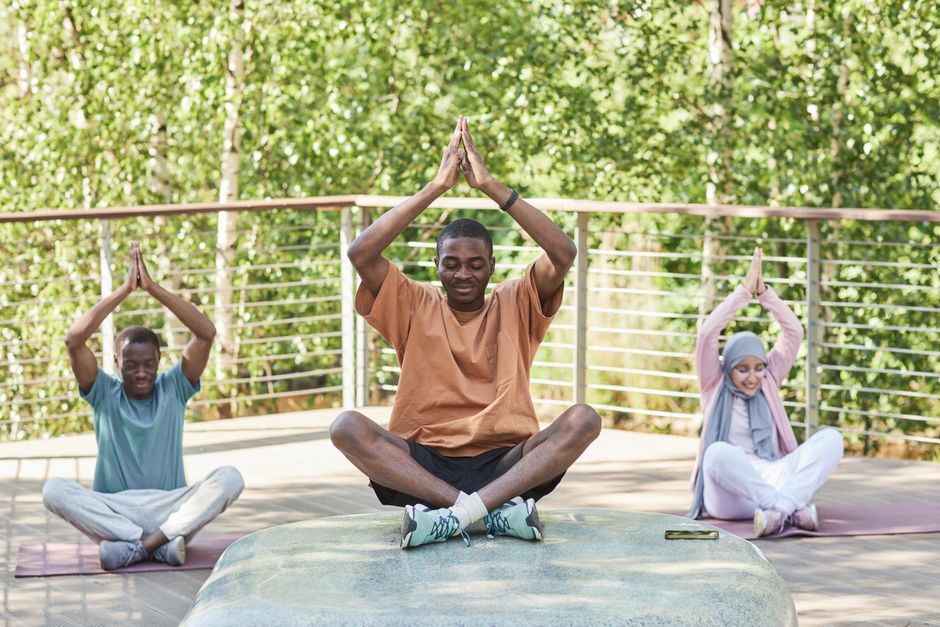
Several local organizations have formalized the exercise-anxiety link into structured programming. Hennepin County's Be Active Be Well initiative, operating out of community centers including Nellie Stone Johnson School and the Near North neighborhood, pairs low-cost group fitness classes with brief mental health check-ins. Sessions run $3 per drop-in for residents who qualify for the sliding-scale rate. The Minneapolis Park and Recreation Board's Thursday evening yoga series at Bde Maka Ska's north beach is free through Labor Day weekend — and fully booked most weeks by mid-June.
Run clubs have become an unexpected anchor for the anxiety-reduction conversation. The group Black Men Run Twin Cities, which meets regularly near the Stone Arch Bridge in the St. Anthony Falls neighborhood, has seen its membership grow by roughly 40 percent since 2024. Organizers say members consistently describe the combination of physical exertion and community as the reason they keep showing up. That tracks with the research: social exercise produces stronger anxiety-reduction outcomes than solo workouts, according to a 2024 meta-analysis from the University of Vermont covering 97 independent studies and more than 11,000 participants.
Yoga studios in South Minneapolis have also expanded their mental health framing. Blooma, located on Grand Avenue in the Mac-Groveland neighborhood, introduced a six-week Anxiety and Movement workshop series in March 2026, priced at $180 for the full program, with partial scholarships available through a partnership with the Minnesota Department of Health.
None of this replaces clinical care. Anyone experiencing persistent, disruptive anxiety should contact a licensed mental health provider — Hennepin Healthcare's behavioral health line is reachable at 612-873-3161. But for the wide band of people managing everyday stress, the evidence keeps pointing to the same direction: get outside, get moving, and do it regularly. The Midtown Greenway is 5.7 miles long. That's a good place to start.